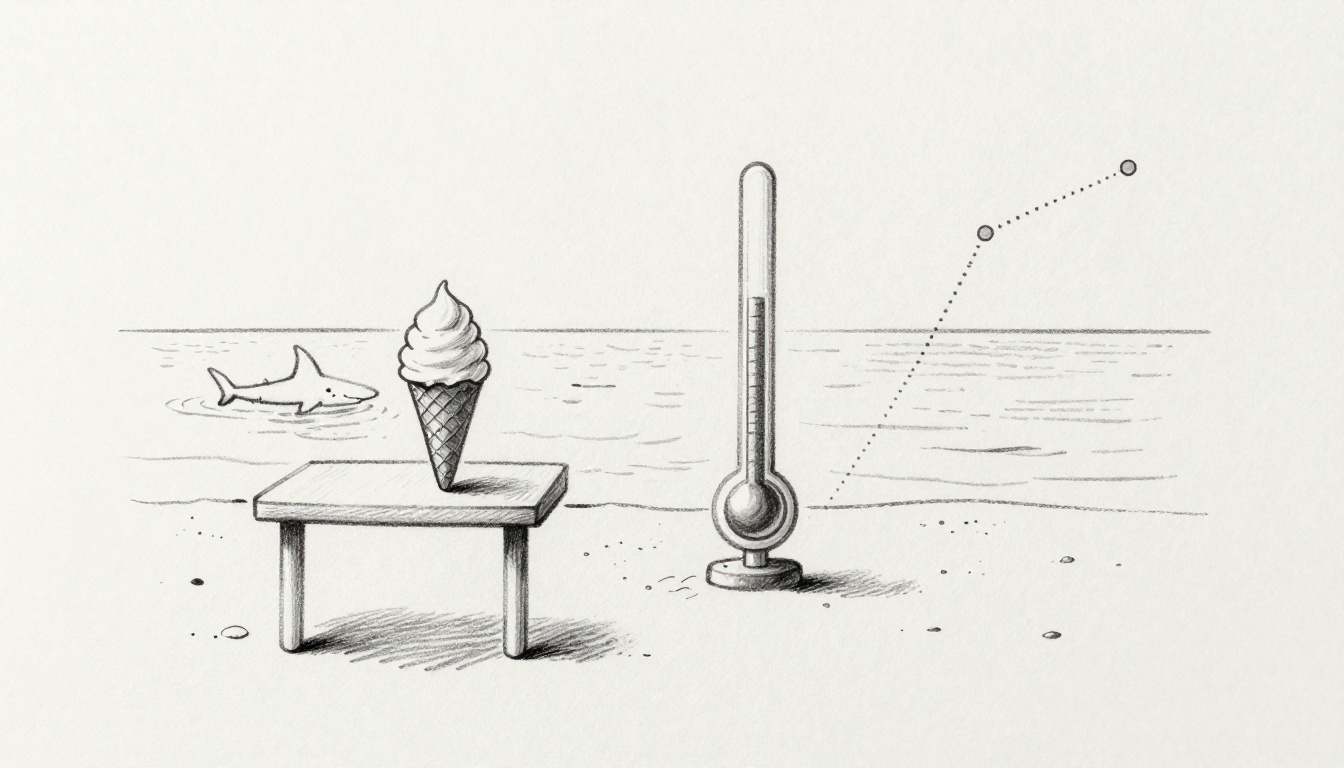
Imagine this. You notice ice cream sales skyrocket right when shark attacks rise in summer. Does that mean ice cream lures sharks? Of course not. Heat drives people to beaches and scoops alike. Yet people fall for this trick daily.
You’ve seen it in headlines. Eat chocolate, win Nobel prizes. Or vaccines spark autism. These claims grab attention because our brains love quick links. But they mix up correlation vs causation, leading to bad choices in health, money, or votes.
This guide clears the fog for beginners. You’ll get simple definitions, real traps, fun examples, and checks to stay sharp. First, we’ll break down correlation. Then causation. Next, why they fool us. After that, stories from life. Finally, steps to fight back.
Grasping Correlation: When Things Just Seem Connected
Correlation happens when two things move together. Sales rise, temperatures climb. Or grades drop as absences grow. Stats measure it on a scale from -1 to 1. Positive means both go up or down. Negative shows one up, the other down. Zero means no link.
Think of friends studying late. They ace tests together. Rain falls, crowds skip stores. These patterns pop fast. Tools spot them in data sets. But correlation stays silent on reasons. It just flags the dance, not the music.
Our brains latch on because we hunt patterns. Evolution wired us that way. Spot a shadow moving with thunder, run from danger. Today, it backfires on spreadsheets or news feeds.
Scatter plots show it best. Dots cluster tight for strong ties. Spread out means weak or none. No lines or math needed yet. Just see the clump.
Correlation helps predict. Stock prices track weather sometimes. But chase “why” too soon, and trouble brews. Hold that thought.
How Strong Is the Link? From Weak to Ironclad
Strength matters. A score near zero signals random noise. Like sock color and soup sales. Around 0.3 counts weak. Height links to reading speed that way in kids.
Push to 0.7, and it strengthens. Adult height and weight hover there. Still, no cause proven. Perfect 1.0 stays rare, like perfect twins in step.
Pearson coefficient crunches numbers. But skip the formula. Focus on feel. Even ironclad correlations hide tricks. Test height-weight. Taller folks eat more, sure. But genes or sports confound it.
Tip for you. Grab free online calculators. Plug data. See the score. Then question deeper.
Unpacking Causation: Proving One Thing Makes Another Happen
Causation goes further. One thing directly sparks the other. A lights the fuse for B. Proof comes from tests that control chaos.
Contrast it quick. Correlation notes smokers and lung cancer rise together. Causation demands experiments. Labs expose cells, track damage. Decades of studies confirm the hit.
Scientists use checkpoints like Bradford Hill. Strength first: Big effect sizes. Consistency across groups. Specificity to lungs, not all ills. Temporality seals it. Smoke first, cancer later.
Analogy fits. Correlation sees smoke with fire. Causation finds the match. Labs mimic that. Random trials assign smokes or not. Watch outcomes.
Real world skips perfect tests often. Ethics block them. So logic fills gaps. Dose up, risk jumps. That hints cause.
Experiments rule because they isolate. Give half a pill, half placebo. Measure change. No other factors sneak in.
What Makes a True Cause? Key Tests to Run
Run these basics. Does A always trigger B? Stop A, does B halt? Time counts too. A must precede B.
Rule out rivals. Third factors lurk. Gold standard stays RCTs, randomized controlled trials. News skips them for speed. Blogs chase clicks instead.
Check every time claims fly. It saves regret.
The Big Mix-Up: Why Correlation Tricks Us Into False Causes
Here’s the mantra: Correlation does not imply causation. Repeat it. Three villains strike most.
Confounders hide third wheels. Ice cream and crime spike in heat. Summer drives both. Not scoops fueling thefts.
Reverse flips it. Does stress cause poor sleep? Or sleep loss sparks stress? Chicken-egg spins endless.
Coincidence piles random hits. Super Bowl wins, then stocks dip. Pure chance over years.
Brains buy it because we seek stories. Evolution rewards that. Spot berries with birds, eat safe. Now ads sell “studies show” without proof.
Ever blame coffee for shakes when deadlines loom? Classic trap. Question patterns. Save yourself.
Graphics help. Arrows from A to B look causal. Add confounder C, lines cross. Wrong path exposed.
Confounders, Reversals, and Pure Chance Exposed
Confounders steal shows. Exercise boosts health. But fit folks eat better too. Diet confounds.
Reverse hits sleep-mood. Grumpy nights breed bad days. Or days sour sleep. Tests untangle.
Chance fools stats kids. Shoe size ties to spelling scores. Both grow with age. Laughable, yet data lies.
Quiz yourself. See vaccine timing and autism claims? Better records spot more cases post-shot. No cause. Mentally flag these now.
Real-Life Pitfalls: Examples That Hit Home
Stories stick. Classic ice cream and shark attacks. Summer heat packs beaches. Sales melt too. Confounder wins.
Chocolate and Nobel prizes sound nuts. Wealthy nations eat more, fund science. Not cocoa sparks genius.
Autism-vaccine myth lingers. Shots come at diagnosis age. Timing fools. Studies clear it huge.
Organs donated rise with wrecks. Age drives both up. No crash swaps kidneys.
Modern twist: Social media likes and teen blues. Sad kids post more vents. Likes chase pity. Selection bias hides.
Fallout hurts. Policies ban safe foods. Meds skipped on lies. Stocks tank on fake links.
Laugh last. Nicolas Cage films spike with pool drownings. Bad movies don’t flood yards. Pure fun nonsense.
These hit wallets, health, votes. Spot them, thrive.
Smart Checks: How Beginners Avoid the Trap
You can fight back. Start simple.
Ask if a third factor explains it. Heat? Wealth? Dig there first.
Check timing. What came before? No reverse without order.
Hunt experiments. Trials or labs? Gold if found.
Watch dose-response. More A, bigger B? Cause strengthens.
Consult stats pros. Sites track spurious links. Try tylervigen.com for laughs.
Practice on headlines. “Coffee cuts risk!” Check confounders.
Could stress drive the coffee love? Bold that doubt.
You’re armed now. Spot BS in feeds. Friends envy your edge.
Correlation flags patterns fast. Causation demands proof through tests and logic. Watch confounders most. They hide everywhere.
You’ve got tools for better calls. Skip rash diets or votes. Question news sharper.
Share a mix-up you caught in comments. Test pals with ice cream tale. Subscribe for more clear guides like this.
You’re ahead of the crowd. Stay skeptical, decide smart.